Coast redwoods live over 2,000 years and store 250 tons of carbon each — yet fewer than 5% of the old-growth remain. We climb the survivors, clone their genetics, and put them back in the ground.
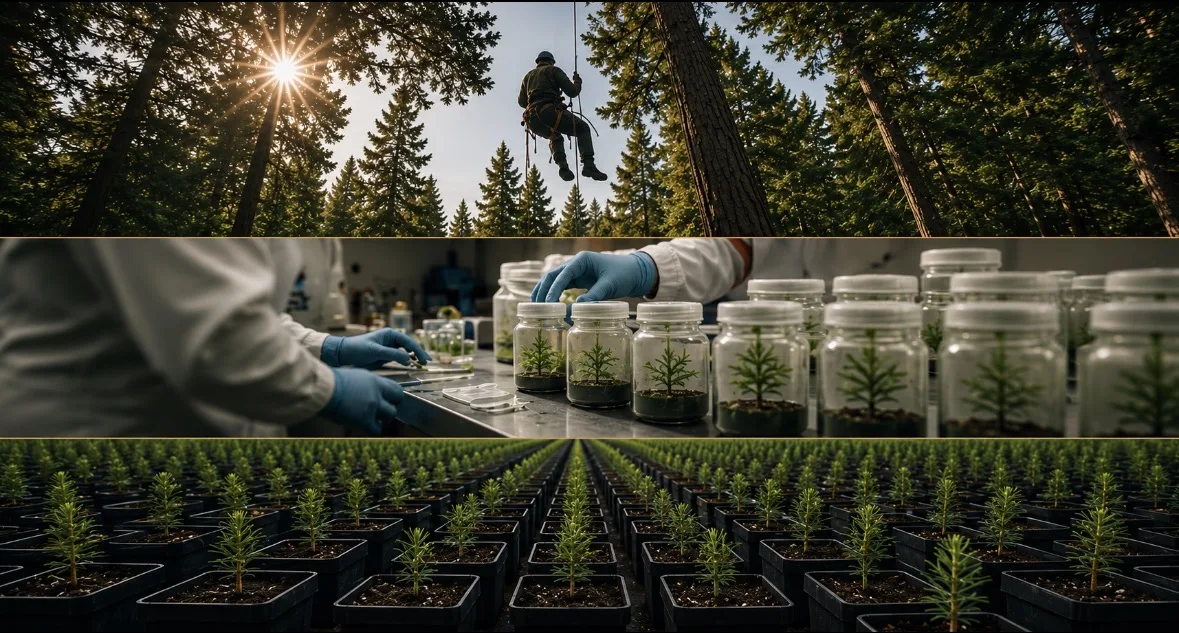
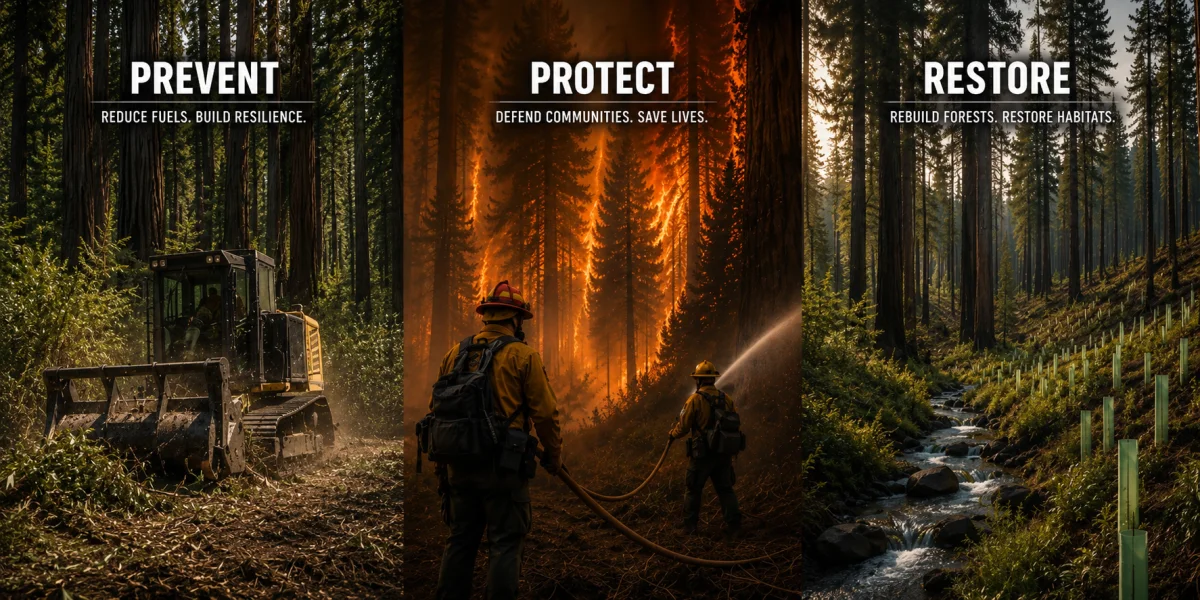
Defend The Redwoods is not a passive observer. We work in the canopy, on the fire line, and at the nursery bench — locating the last champion redwoods, cloning their genetics before they are lost, and replanting them across the forests that once held them.
The oldest of these organisms were already standing when Rome fell. They are functionally immortal — until a chainsaw or a crown fire ends over two thousand years in an afternoon. Our mandate is simple: capture the genetics of the greatest survivors, and give them somewhere to grow.
Every program we run is measured, funded transparently, and built to outlast us. We hold the long view, because the trees demand it.
Specifics over adjectives. Every figure below is a reason the work cannot wait.
A small, disciplined operation. Each program is run by people who do the work — and measured by what it puts back in the ground.
We propagate cloned champion redwoods — raising the genetics of the largest, oldest survivors from cutting to sapling at the nursery bench, ready to replant the trees that beat every fire and drought.
Active stewardship of standing groves — thinning understory and protecting root systems — paired with fuel-load reduction, aerial recon, and rapid wildfire response around the highest-value trees.
A single mature coast redwood locks away hundreds of tons of carbon for as long as it stands. We protect and replant the biggest sequesterers, turning living giants into long-term carbon vaults.
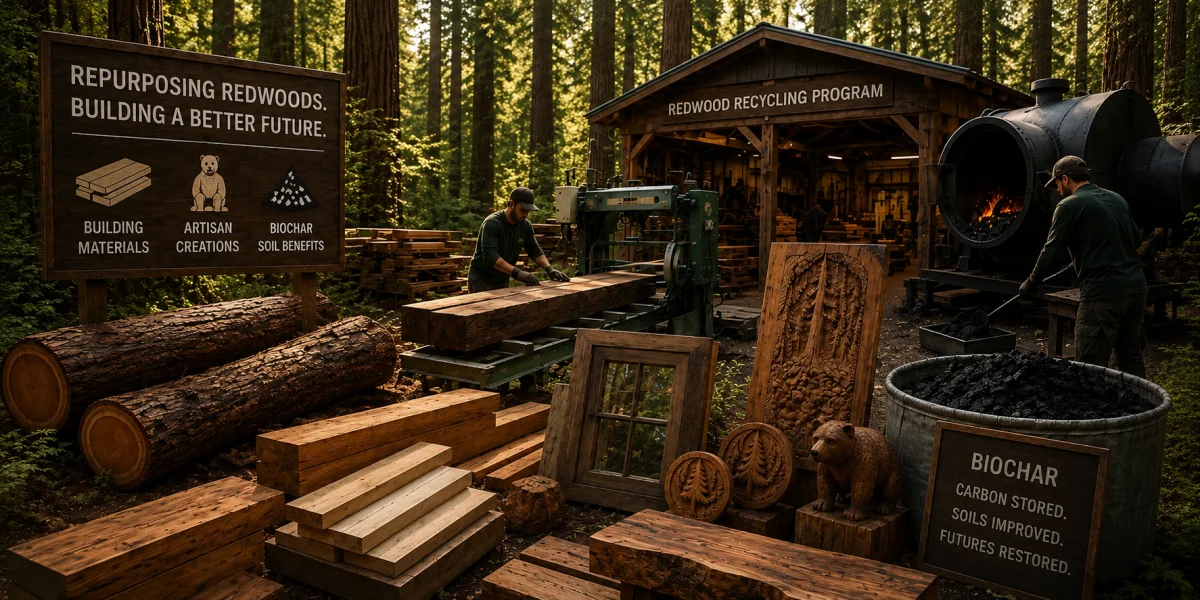
Salvaged and reclaimed redwood is given a second life — keeping irreplaceable old-growth material out of the landfill and easing the pressure on the living trees still standing.
The genetics that could reforest the planet are locked hundreds of feet in the air. For the first time, they are within reach. Here is the path from a living giant to a replanted grove.
Identify the largest, oldest, most resilient survivors using historical records and field survey.
Trained climbers ascend into the canopy — the only place the youngest, most viable growth lives.
Small cuttings are taken without harming the tree, then kept viable on the descent and in transit.
Cuttings are propagated into genetically identical saplings and the genetics are permanently archived.
Champions are returned to protected ground to grow for the next two thousand years.
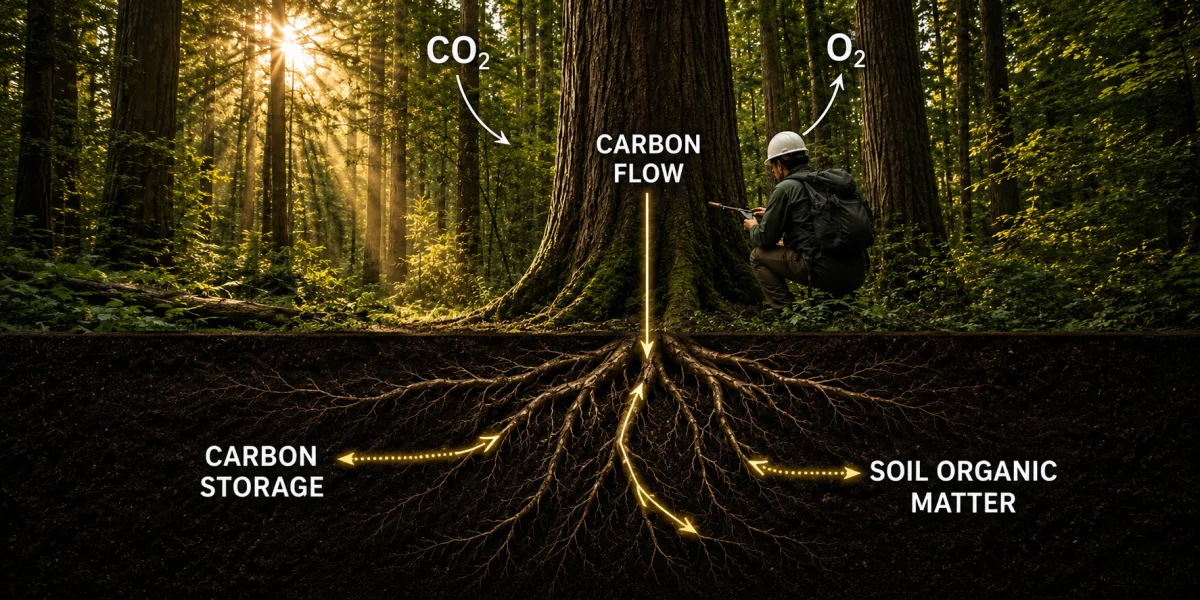
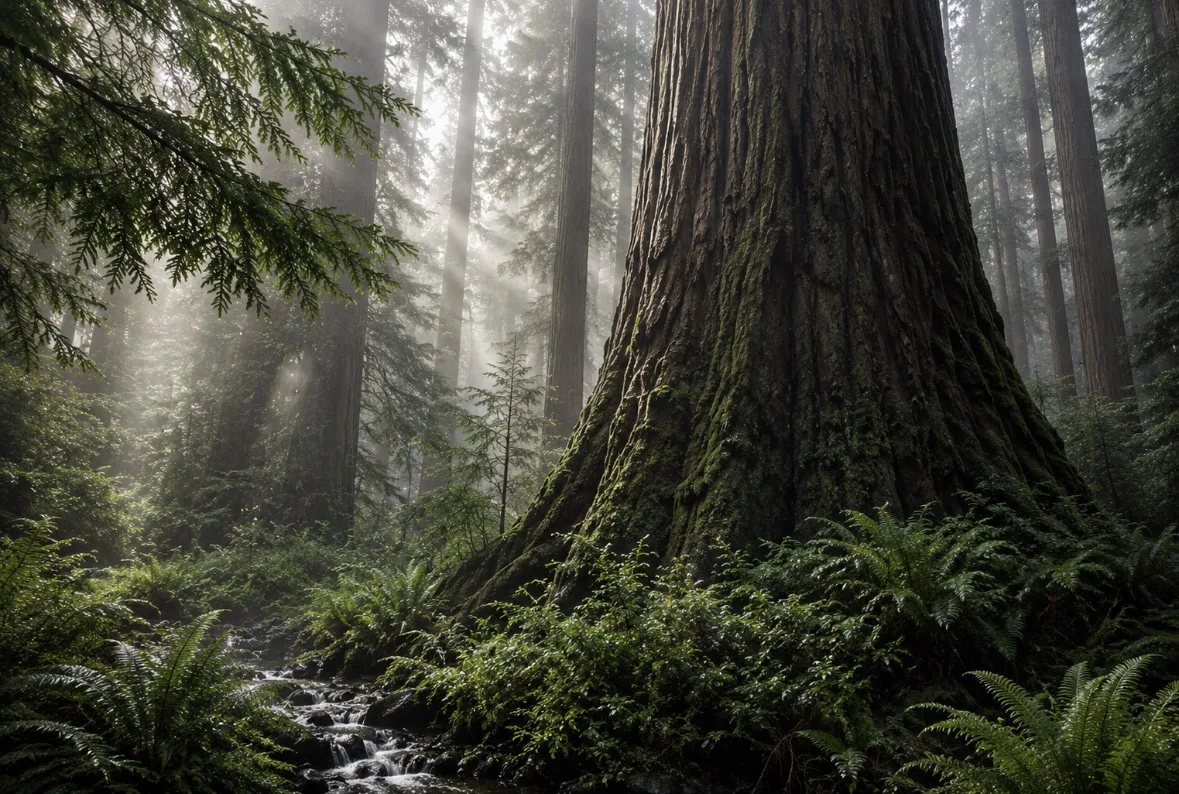
A redwood canopy intercepts coastal fog and delivers up to 40 inches of additional water to the forest floor each year — recharging aquifers as droughts intensify. Below, the trunk locks away 250 tons of carbon for as long as it stands. Protect the genetics, and you protect the machine.
Cloning the world's most iconic trees takes specialists. We work shoulder to shoulder with the people who pioneered it.
×
Defend The Redwoods is a proud partner of the Ancient Tree Archive, founded in 2006 to locate, clone, and archive the genetics of the world's oldest and most iconic trees. Together we turn living giants into living libraries — so that what took over two thousand years to grow is never lost in an afternoon.
The trees can't wait for a better quarter. Every gift goes straight to the ground — to rope, to cuttings, to seedlings, to the crews who do the work.
$35 raises a champion seedling from cutting to sapling.
$100 buys climbing rope for one 380-foot canopy ascent.
$1,000 replants a quarter-acre with cloned old-growth genetics.
Tax-deductible. EIN 88-0601872 · 501(c)(3)
Your $100 gift goes straight to the canopy. A receipt would arrive in your inbox.
Field notes, climb logs, and cloning milestones — a few times a year, when there's something real to report.